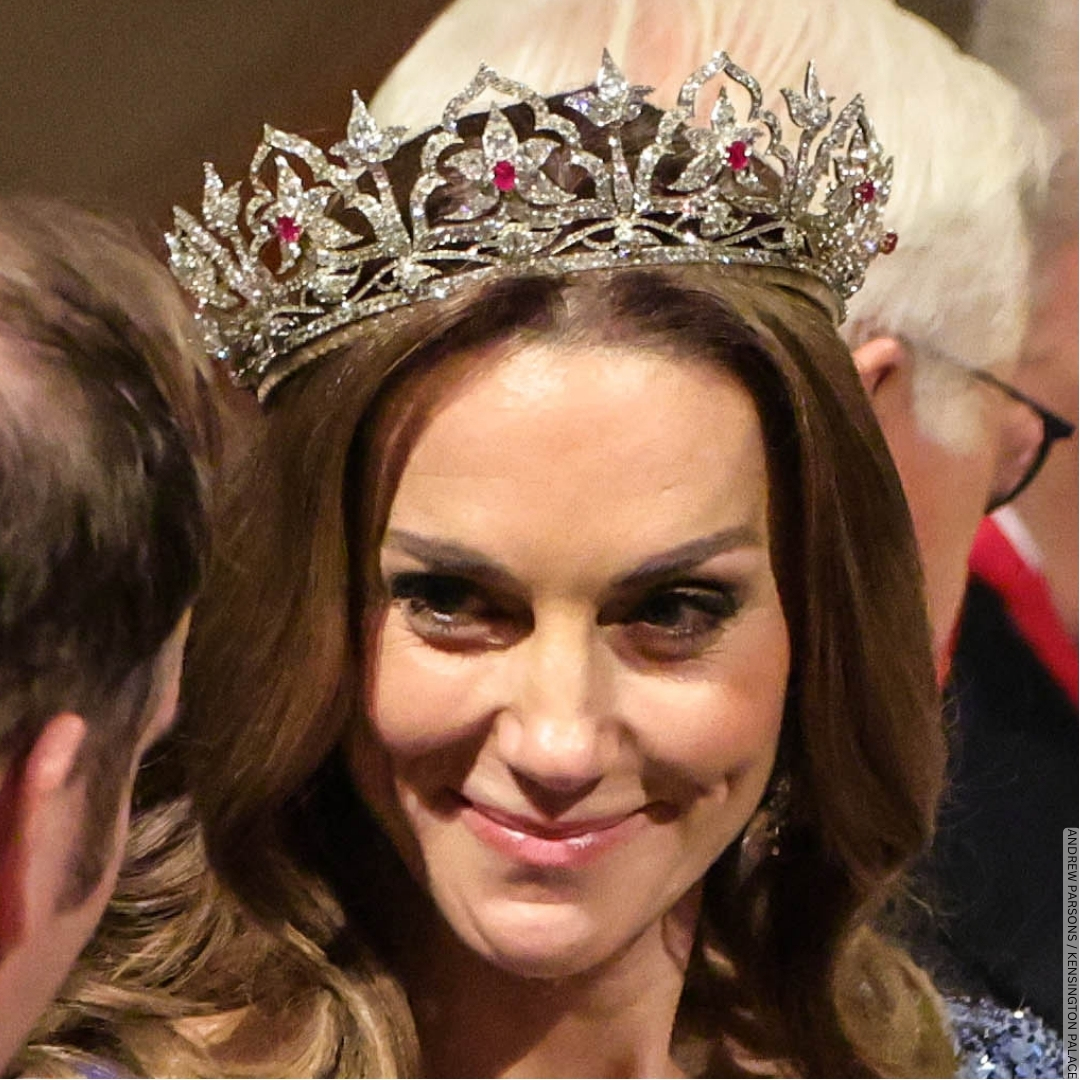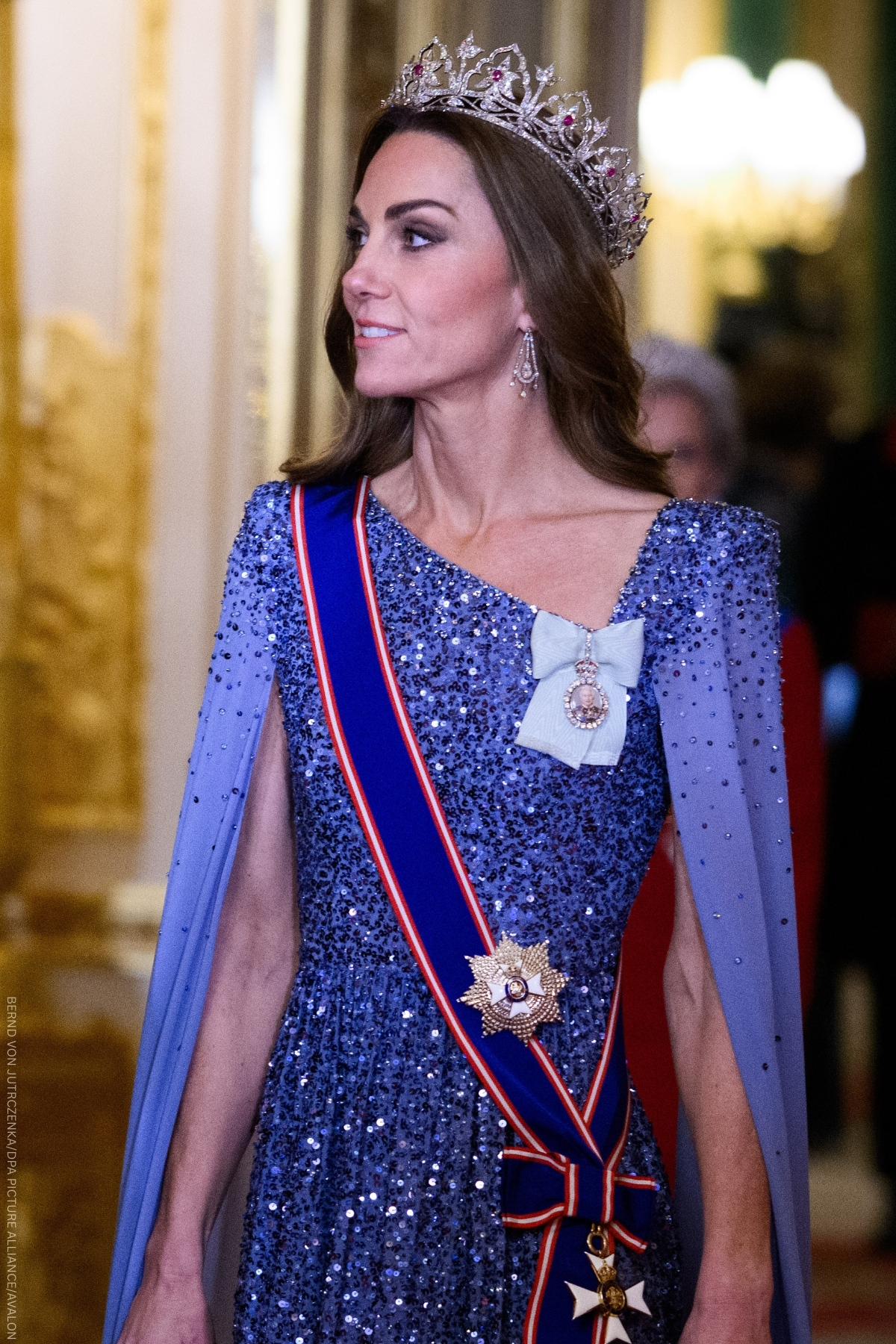
Kate Middleton looked sensational at Wednesday’s State Banquet in honour of German President Frank-Walter Steinmeier.
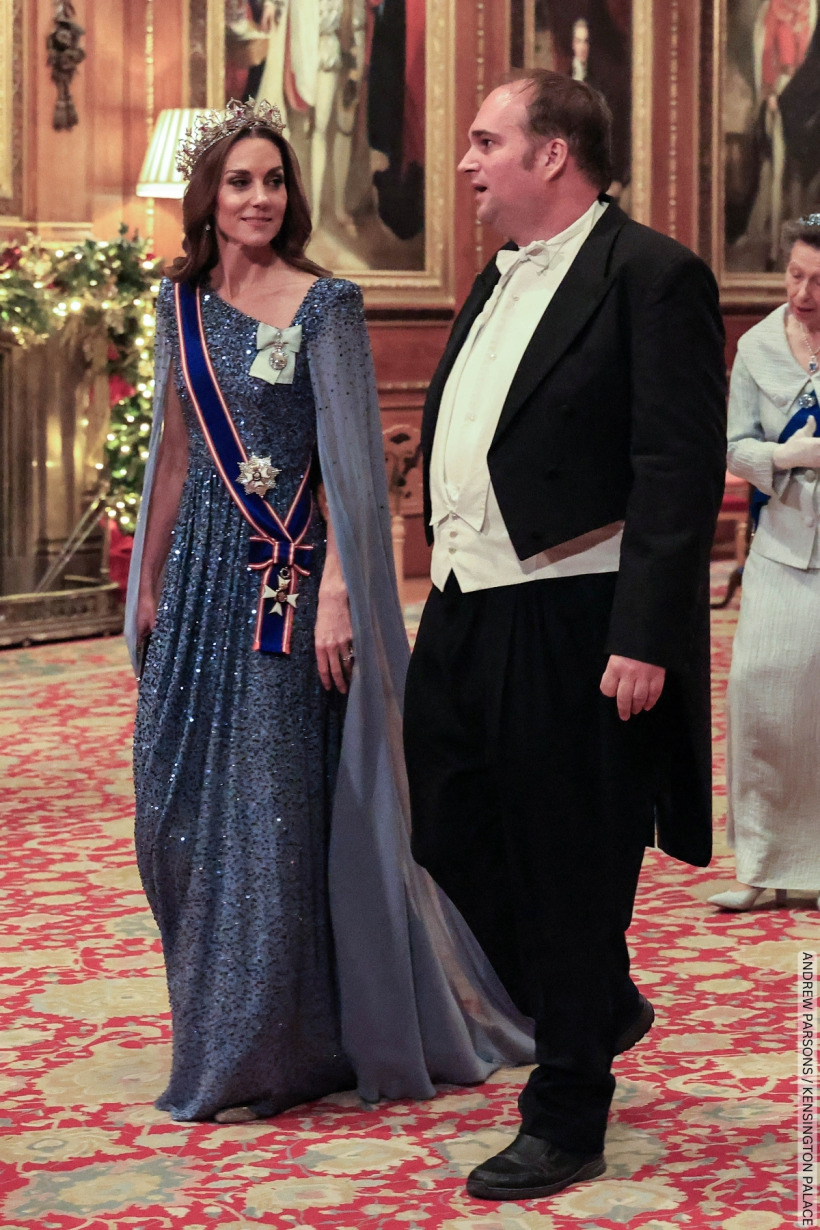
The Princess of Wales arrived at Windsor Castle in a stunning blue sequinned gown by Jenny Packham, topped off with a historic tiara that hasn’t been seen in public for decades.
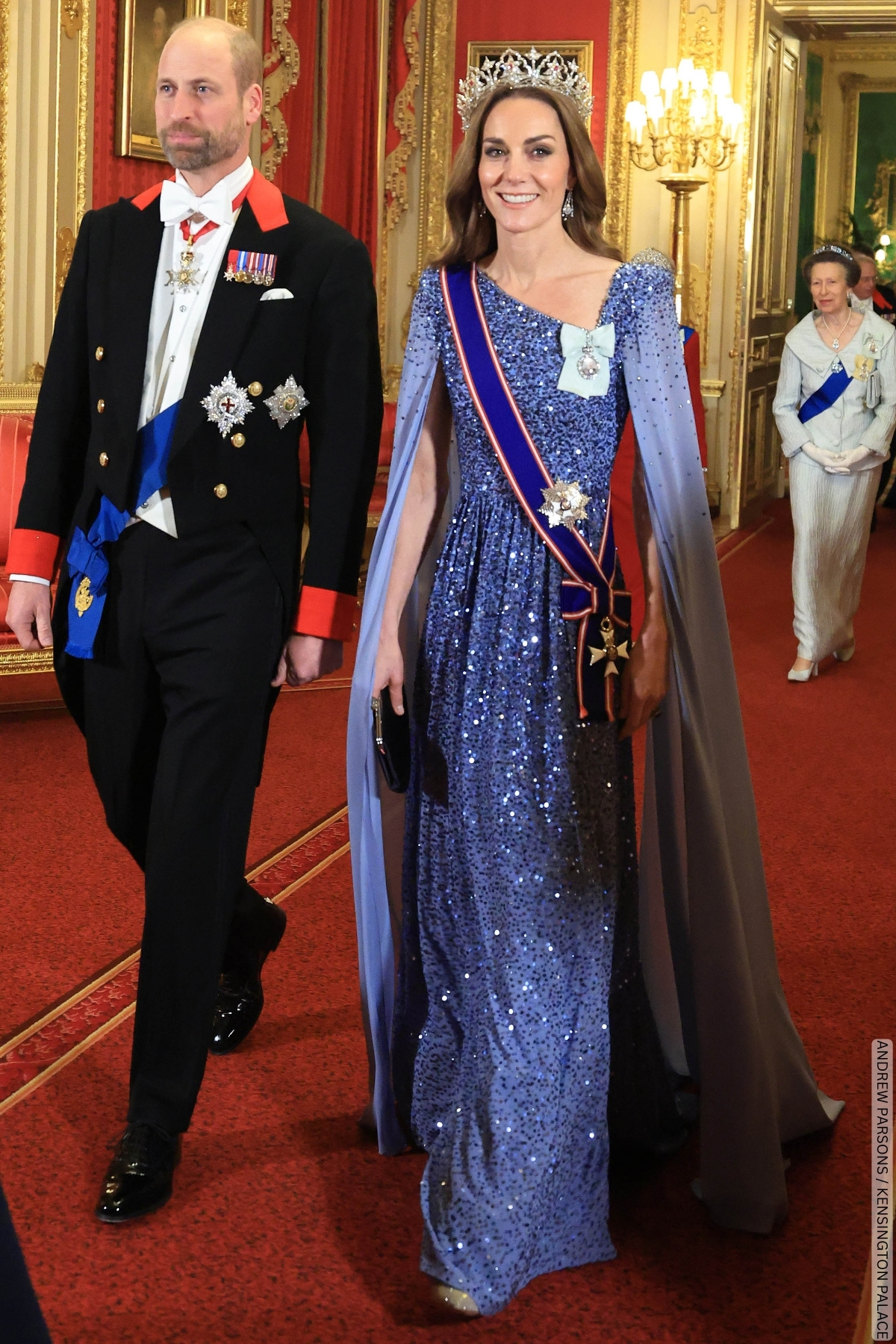
Perched on her head was the Oriental Circlet Tiara, a distinctive Victorian piece crafted by Garrard in 1853.
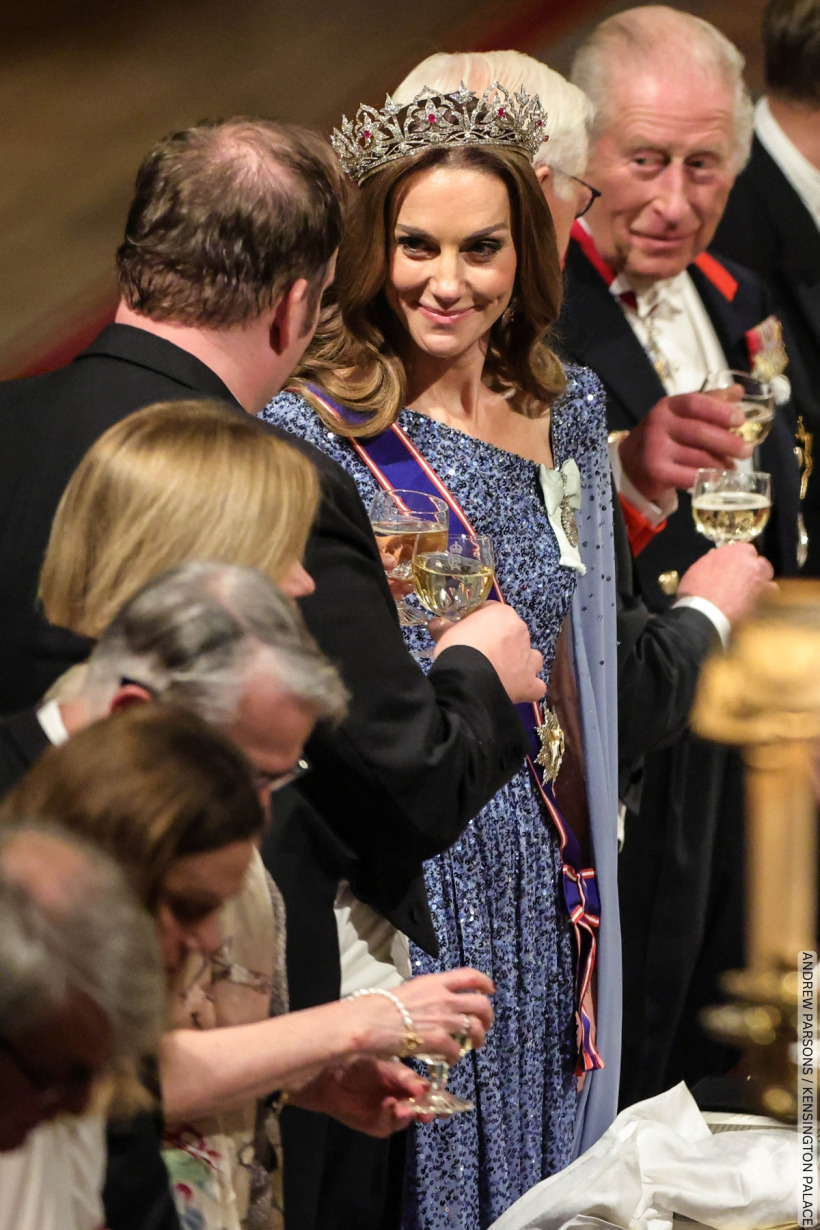
Designed under the direction of Queen Victoria’s beloved husband and consort, Prince Albert, it originally featured Albert’s favourite gemstone, the opal, before being reset with rubies by Queen Alexandra.
The 172-year-old tiara carries a clear link to the country being honoured tonight. Prince Albert was German, which makes this choice feel like a thoughtful nod to the occasion.

Kate’s ensemble held a second hidden link to Germany, too—its colour.
This shade of blue is associated with the country for a couple of different reasons.
Firstly, Prussian blue—the first modern synthetic pigment, famously created in Berlin in the early 18th century. European painters quickly adopted the pigment as an affordable alternative to ultramarine, made from costly lapis lazuli.
From the early 1700s onwards, blue became the signature uniform colour of the Prussian Army. Known as Dunkelblau (dark blue), it gained strong symbolic importance and remained in use for most German military ceremonial and off-duty dress right up until the First World War.
There’s also the cornflower, Germany’s national flower. A blue flower that’s become a symbol of national identity after Queen Louise famously hid her children among cornflowers while fleeing Napoleon’s troops.
Today, shades of blue often feature in German celebrations.
Kate—who loves symbolic dressing—chose a similar shade for her visit to Germany in 2017. William and the children wore coordinating tones, too.
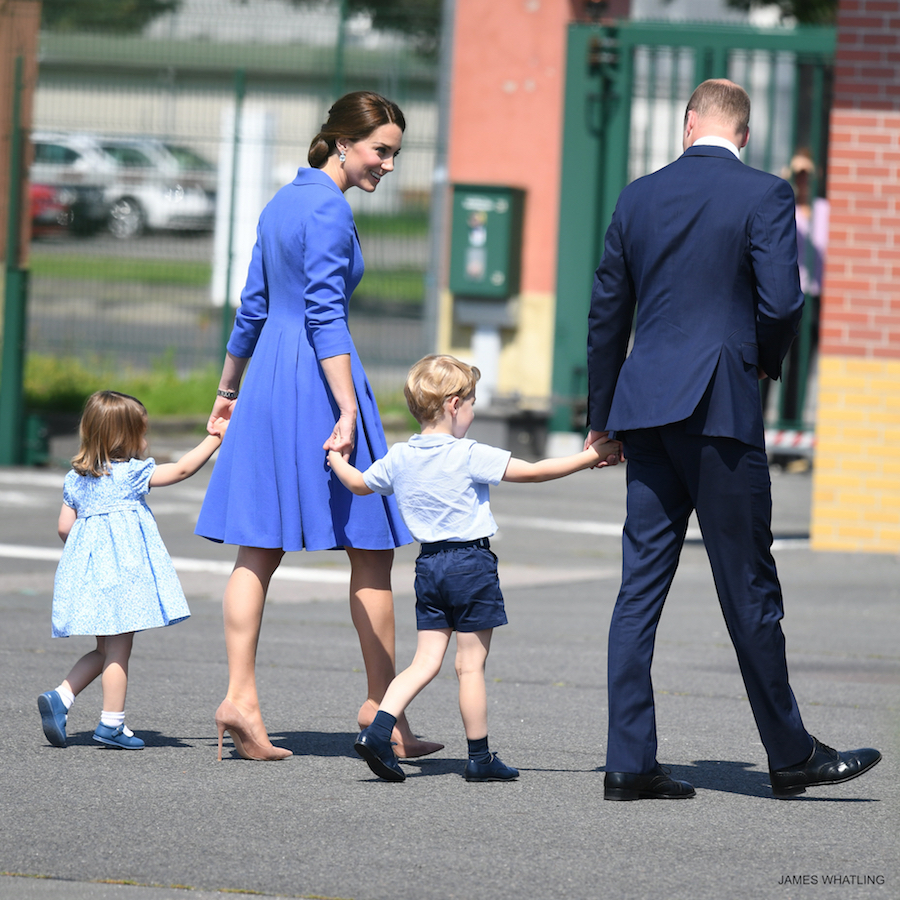
So, a significant colour for Germany. And another diplomatic choice for Kate.
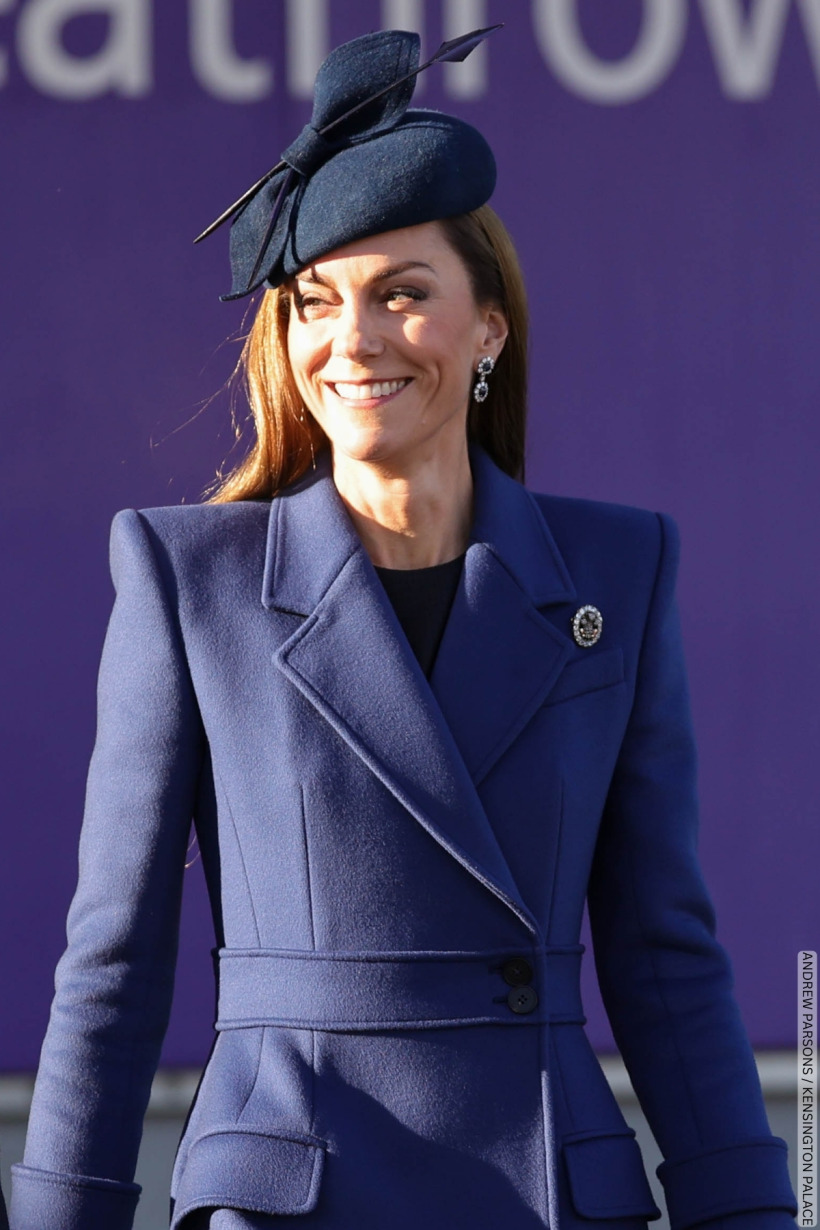
Which probably explains why she wore blue earlier in the day, too:
She wasn’t alone:
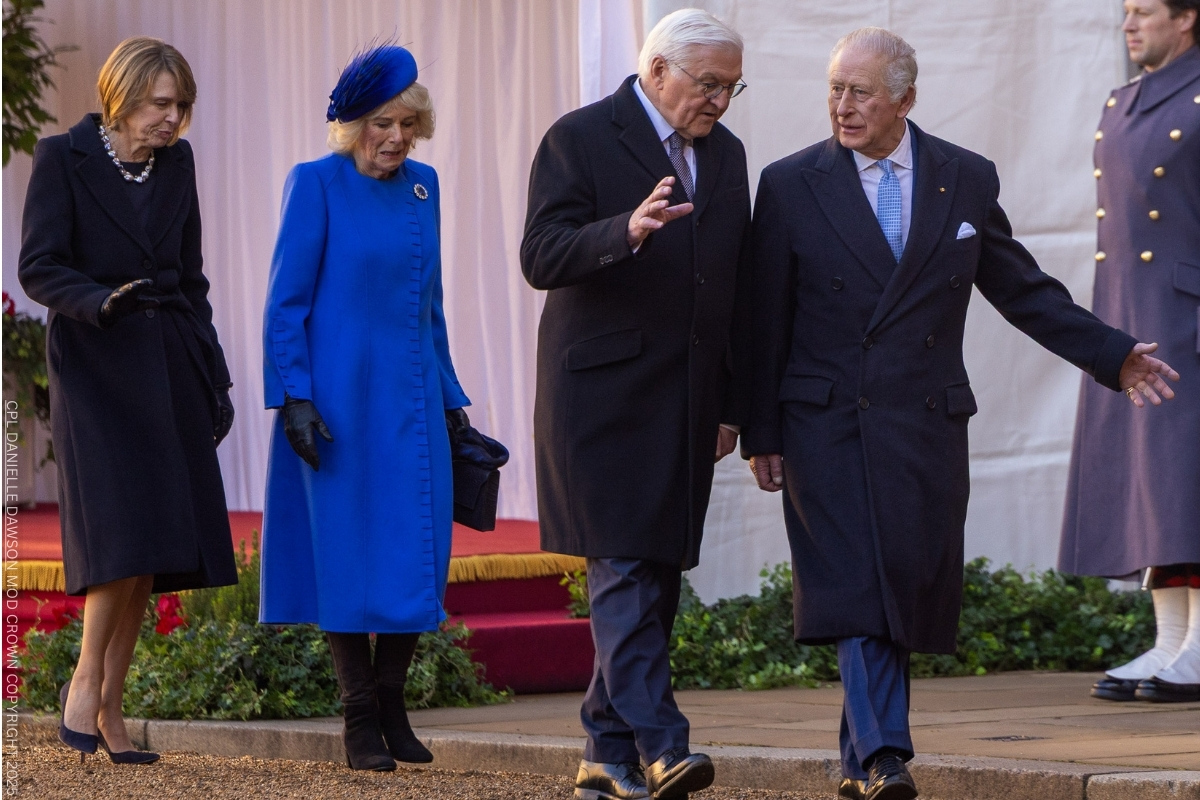
It was very much the colour of the day:
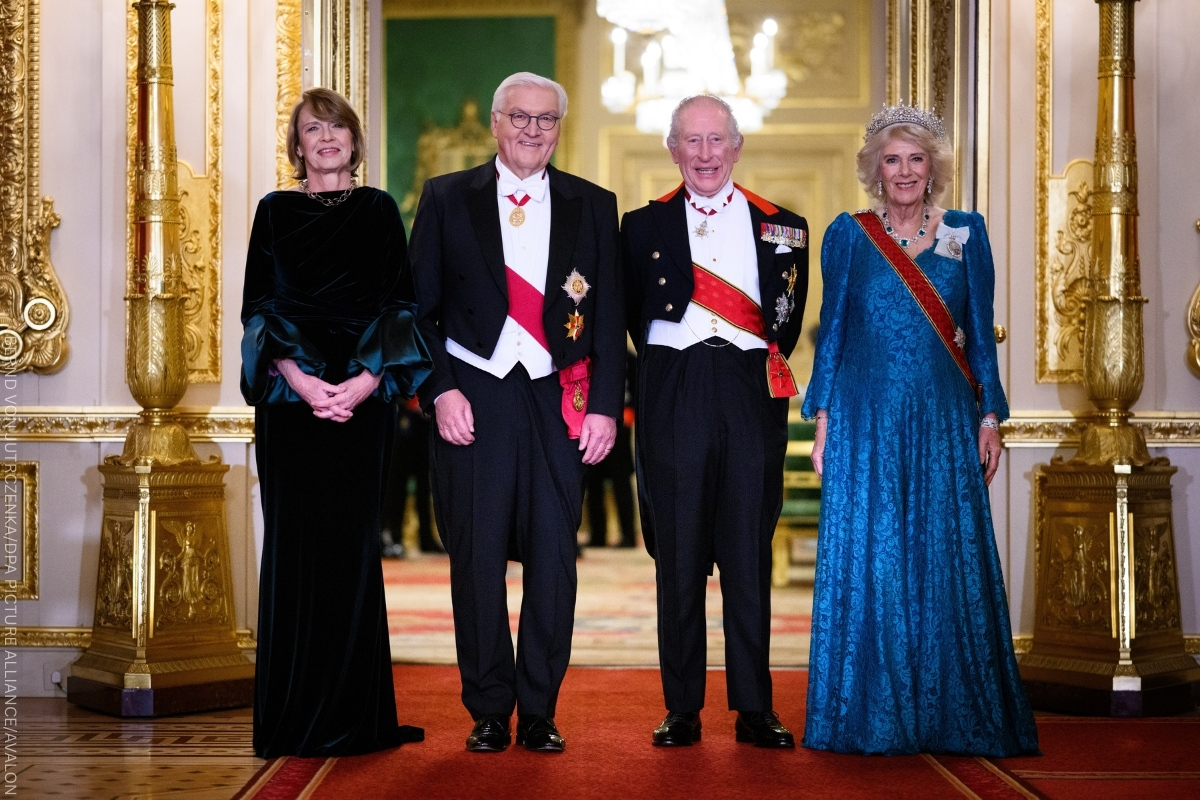
King Charles and Queen Camilla hosted the banquet in St George’s Hall, which looked particularly magical as the castle has been dressed for Christmas.

At the centre of the hall stood a towering 20-foot Nordmann fir, grown in Windsor Great Park and decorated with over 3,000 green and gold baubles and lights.

It’s a fitting backdrop for the state visit—the Christmas tree tradition was introduced to Britain by Queen Charlotte of Mecklenburg-Strelitz, herself born in Germany, before becoming a national favourite under Queen Victoria, whose (of course, German) husband, Albert, is largely credited with popularising the tradition.
Festive garlands were draped from the balconies running the length of the hall, creating a warm, glowing frame around the long banquet table. The effect was classic Windsor Christmas
The guest list included over 160 VIPs, including political figures, cultural leaders and representatives from across public life.
Following tradition, the King and President Steinmeier delivered speeches at the start of the meal, reinforcing the long-standing ties between the United Kingdom and Germany.
Earlier in the day, William and Kate met President Steinmeier and Ms Büdenbender on behalf of The King, before travelling to Windsor.
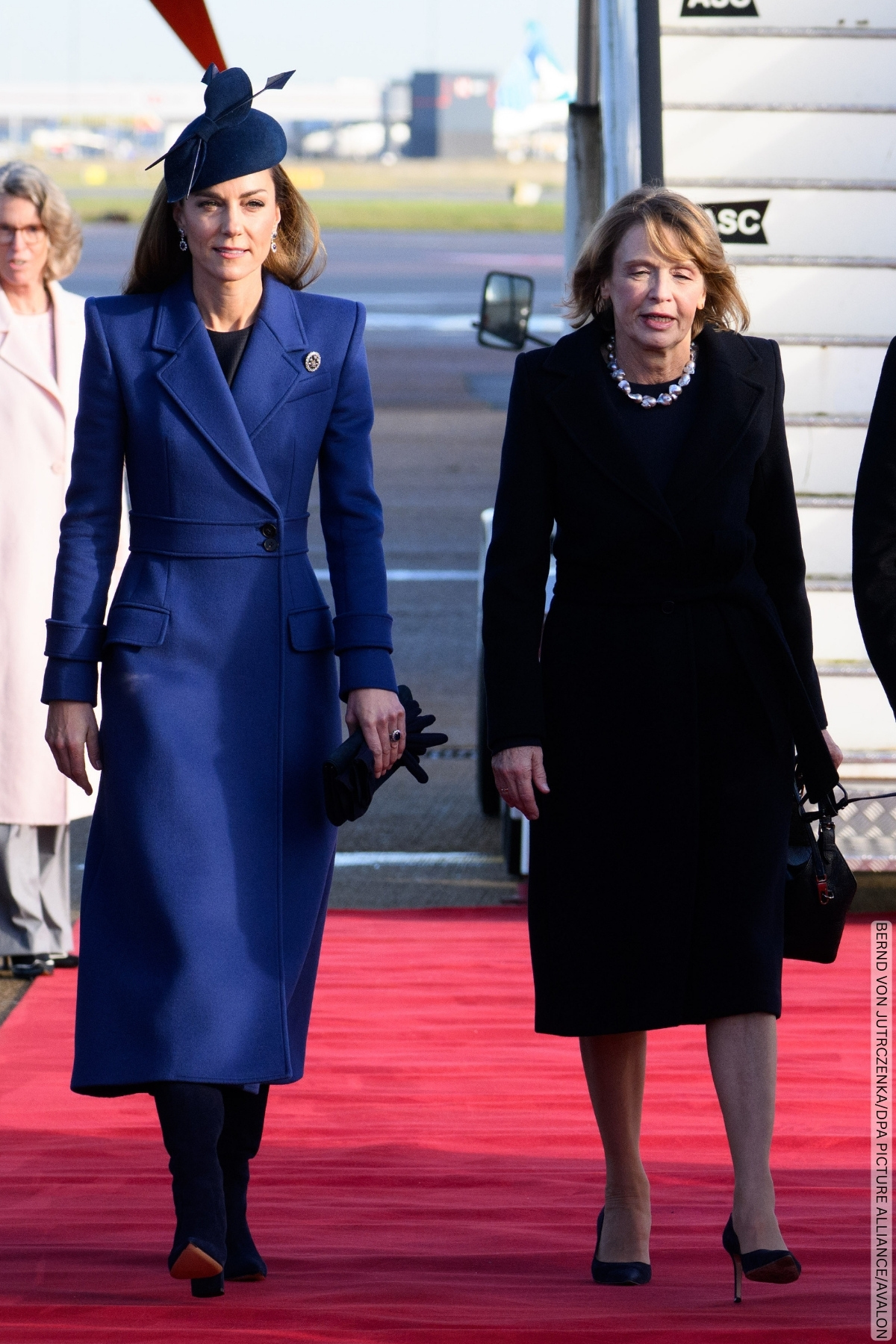
There, the official welcome unfolded, complete with a royal salute, guard inspection, and a carriage procession through the Castle grounds. The President later visited Downing Street, while Ms Büdenbender visited Judith Kerr Primary School, named after the German-born author.
Full analysis of Kate’s STUNNING banquet coming —
This post is a work in progress. If you’d like to read the full write-up later today, I will send it to your inbox. Add your details below: